BLOGS
I last saw Cosmopolis over a year and a half ago. Exam season had ended and my application to university went through successfully. With nothing else to do but wait, I quietly spent my time in monotony, and eventually left for university with bittersweet memories of the apartments where I had lived for the final years of my schooling. I never thought I’d come back.
Earlier this year in March, an unprecedented pandemic hit the world, leading to innumerable deaths, an economic crisis, and a complete overhaul of modern communication. I was staying at a relative’s place in London at the time. I wasn’t worried. My brilliant plan was to simply wait out the virus and then hop onto a bus and head back to university. I had however, in my naivety, failed to foresee the British government’s subpar response to the exponential rise in cases. With only a week’s worth of clothes and an old laptop in my suitcase, I was left stranded for nearly 3 months before I was finally freed by Air India and their initiative to airlift stranded Indian citizens out of foreign countries. Braving the summertime weather in June, I packed up my things and got ready to go to Heathrow airport. I made my way through thousands of surprisingly well-managed lines full of paranoid passengers foaming at the mouth to get back to their families. After nearly 4 hours of waiting and 12 hours of travel, I arrived at Bhubaneswar.
A wave of nostalgia hit me as I stepped out of the airport. I crammed my suitcase into the back of an uber and stared out of the windows at a cloudy sky. For a city that suffered the wrath of a cyclonic storm, Bhubaneswar was doing pretty well. The city seemed greener than ever, and any evidence of the cyclone’s destruction had quickly and efficiently been hidden by nature. The crudely constructed metal shelters that usually littered the sides of the highway were nowhere to be found, replaced instead by towering trees and demure shrubbery. Khandagiri square was empty, an unusual sight for one of the busiest places in Bhubaneswar. The uber slowly pulled up towards Cosmopolis, and at first glance it looked to me like nothing had changed. Buzzing insects gathered around the dimly lit, blinking streetlamps. The stores had been shut. Not a single soul was around.
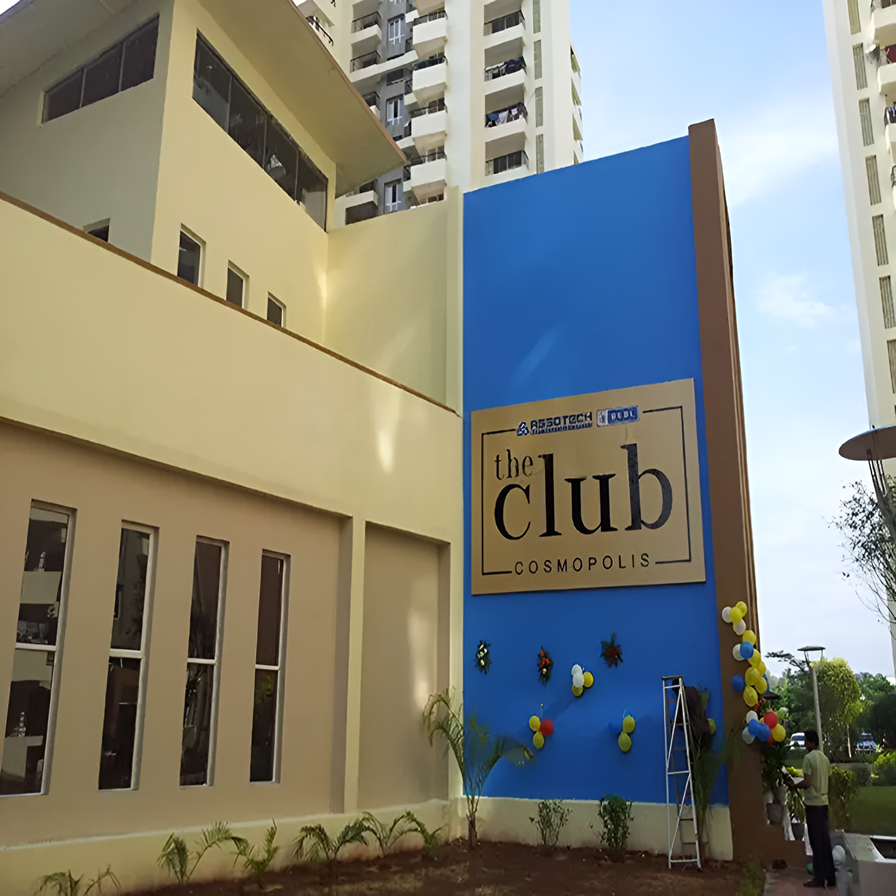
It was only in the morning when I saw that nearly everything had changed. The grounds had been filled with all kinds of trees, and flowering bushes guarded each block. Every open wall had been splashed with color, and murals of flowers, mythological figures, and tribal designs now decorated the previously bare concrete. Fountains had popped up on the corners of the property, complete with unique sculptures and colorful lighting. The places where students would sit to wait for their school buses had been refurbished. A circle of baby-blue seats took their place, akin to a fairy ring that had sprouted from the ground.
Décor wasn’t the only different thing about the premises, however. Sanitizing stations stood guard in front of every elevator and masks had become the new norm. The supermarket had been working overtime to get groceries to isolating tenants. Deliverymen for Amazon came with sanitizers of their own and pleaded for contactless transactions. I was pleasantly surprised by these changes, coming from a country that had suffered the consequences of not following proper protocol during the pandemic.The restrictions didn’t stop the residents from having their fun, however. Weekly events were introduced, from inclusive football matches to games of Tambola at the amphitheater. A temple was also built on the premises, providing a public place of worship for the faithful.
In spite of all of these changes however, Cosmopolis is still the same apartment it was before. The restaurant on the second floor of the shopping complex remains mysterious as ever, while Rice Bowl, much like a struggling actor, has been through a myriad of name changes. The barber shop still has the amazing ability to somehow be closed whenever a haircut is desperately needed. The new benches in Cosmopolis have remained unused since their installation, while the entrance to each block is almost always populated by aunties tired of their evening walk. Then again, none of these qualities can be construed as negative. In fact, I’d argue that they add charm. No one is perfect, and at the end of the day, all I can really say is: I’ve never felt so at home.